
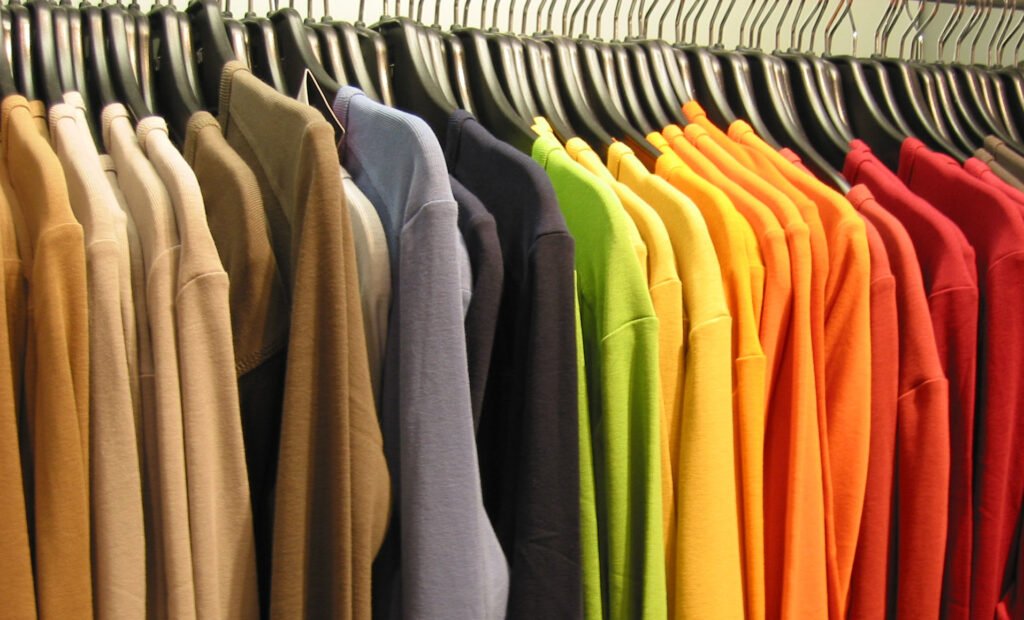
Which GSM is best for T-shirts? There is no universal winner. A 160 GSM tee can suit lightweight casual wear; 180 GSM can be a versatile middle option; 220 GSM may suit a more substantial silhouette; and 240 GSM can provide a heavyweight feel. Fabric composition, fit, construction and the intended use matter just as much as the number. This guide helps bulk buyers compare the four weights without assuming that any particular option is currently available from Namakool.
What Does GSM Mean in T-Shirt Fabric?
GSM stands for grams per square metre. It measures fabric mass per unit area, not the weight of a complete T-shirt. A 180 GSM jersey fabric weighs approximately 180 grams for a flat square metre of that fabric under the measurement method used. The finished garment also includes collar rib, stitching, labels and construction details, so you cannot calculate its exact weight from GSM alone.
GSM is a useful starting point when comparing fabric options from the same supplier, but it is not a quality certificate. Fibre type, yarn quality, knit density, finishing, dyeing, shrinkage control and stitching determine much of the final experience. Two garments both labelled 180 GSM can feel surprisingly different.
160 GSM T-Shirts: Lightweight Options
A 160 GSM single-jersey T-shirt is often considered relatively lightweight. It can be suitable for warm-weather promotions, casual everyday wear and events where breathability and ease of movement matter. The actual comfort depends on fibre composition, knit and fit, rather than weight alone.
For a large promotional campaign, ask whether the proposed fabric is opaque enough in your chosen colour, especially white and other light shades. Hold a sample against light, examine its drape and assess whether the logo application changes the hand feel. Do not assume every 160 GSM garment is thin or low quality: knitting and finishing can change the result.
Buyers should ask for a finished-garment sample, size chart and wash-care information. A sample in the actual colour is more informative than a generic fabric swatch.
180 GSM T-Shirts: Versatile Everyday Weight
An 180 GSM fabric is a common reference point when buyers want a balance between lighter feel and a little more body. It may work for employee merchandise, retail basics and promotional T-shirts, depending on the exact garment. The number does not guarantee a particular softness, opacity or lifespan.
For a corporate order, compare 160 and 180 GSM samples in the same fibre composition and fit. Evaluate the neckline after gentle stretching, inspect seams and check how the fabric sits on different body shapes. If the shirts will be worn repeatedly, ask how the supplier assesses shrinkage and colourfastness rather than choosing by GSM alone.
When the same garment will be used in several locations, climatic conditions and wearer preferences may matter more than a small weight difference.
220 GSM T-Shirts: Substantial Casual and Streetwear Feel
At 220 GSM, T-shirt fabrics can offer a more substantial hand feel and structured drape. Many buyers exploring relaxed-fit or oversized collections use this weight as a comparison point. It is not inherently premium, and its suitability depends on how the fabric has been made.
Heavier cloth can affect warmth, drying time, silhouette and decoration feel. A boxy T-shirt pattern designed for 220 GSM may behave differently from a slim-fit pattern cut from the same fabric. Request actual measurements, not only an S/M/L label. Test a sample after washing according to the care label.
For fashion labels, check how the shoulder drops, how the hem hangs and whether the neckline maintains its shape. These are fit-and-construction questions, not answers GSM can provide on its own.
240 GSM T-Shirts: Heavyweight Options
A 240 GSM fabric is generally positioned as heavyweight relative to the other weights in this comparison. It can appeal to buyers seeking a dense, structured garment for a particular streetwear aesthetic or cooler-weather use. Whether it is comfortable for your audience must be tested rather than assumed.
A heavier garment may cost more to ship because the finished pieces can weigh more, but freight depends on packing dimensions, total shipment and service. The garment price itself also depends on fibre, finish and manufacturing, so do not infer a fixed price premium from GSM.
Check whether the fabric feels stiff, soft, compact or open-knit. Heavyweight is a design choice; it is not a substitute for consistent sewing, appropriate dyeing and sound quality checks.
160 vs 180 vs 220 vs 240 GSM: Side-by-Side Comparison
The following table describes general tendencies, not guaranteed product specifications. A supplier’s sample should override any generic comparison.
| Fabric weight | General feel | Potential use | Buyer check |
|---|---|---|---|
| 160 GSM | Relatively lightweight | Warm-weather casual and promotional | Opacity, comfort, drape |
| 180 GSM | Moderate weight | Everyday merchandise and uniforms | Softness, fit, shrinkage |
| 220 GSM | More substantial | Relaxed and oversized styles | Silhouette, collar, wash results |
| 240 GSM | Heavyweight | Structured fashion garments | Warmth, stiffness, comfort |
How Fabric Composition Changes the Result
Cotton, polyester and blends can have different moisture management, surface texture, stretch, recovery and care needs. Even within cotton, yarn construction and finishing influence softness and durability. A polyester-rich 180 GSM performance knit is not interchangeable with a 180 GSM cotton jersey.
Ask whether the fabric is single jersey, interlock, pique or another knit. Polo T-shirts often use different structures from round-neck jerseys, so a numerical GSM comparison across these categories can be misleading. If your design needs a particular texture or drape, describe the intended result rather than ordering solely by a number.
Request the exact fibre percentages in writing. Avoid assuming that a marketing term such as premium cotton or breathable fabric defines a measurable specification.
GSM and T-Shirt Printing or Embroidery
Decoration choice should follow a technical check of the actual garment. Direct-to-film transfers, direct-to-garment printing and embroidery interact differently with fabric surfaces and garment stretch. The GSM value by itself cannot establish compatibility.
For a large back print, examine whether the printed area changes flexibility and comfort. For a small embroidered chest logo, check fabric stability and whether backing is needed. Fine artwork, thread density, transfer size and curing requirements should be assessed by the decorator. A mock-up shows positioning, but a physical proof can reveal texture and placement issues.
See the DTF vs DTG vs embroidery guide for the decision factors. Confirm availability and suitability for your selected product before paying for artwork preparation.
GSM for Corporate Uniforms and Staff Merchandise
Uniform buyers should begin with the work environment. A team working outdoors in summer may prioritise airflow and moisture comfort; a reception team may value shape retention and a polished appearance. Neither requirement automatically points to one GSM.
Choose between round-neck and polo styles first, then compare samples within the chosen style. Review the round-neck T-shirt reference and polo T-shirt reference when preparing an enquiry. These catalogue references are not promises that all four GSM options are stocked.
Ask employees to try the sample across the expected size range. Record the actual garment measurements and wash-care requirements so repeat orders can be evaluated against the same specification.
GSM for Clothing Brands and Oversized Fits
A new streetwear label should treat fabric weight as one part of product development. Start with the intended silhouette: regular, relaxed, boxy or oversized. Then compare suitable fabrics and adjust the pattern accordingly. A heavier fabric may emphasise structure, while a lighter one may drape more fluidly.
The neckline, rib recovery, shoulder seam position and body length strongly influence how an oversized tee looks. A garment that photographs well on one model may not fit the target customer consistently. Test multiple sizes and record tolerances before committing to a larger order.
If you are adding private labels, neck prints or hangtags, include those in your development brief. The private-label T-shirt guide covers the wider planning process.
GSM for Schools, Colleges, Events and Promotional Campaigns
An event organiser may care about comfort, budget and delivery coordination more than a heavyweight appearance. A school or college may need durable garments that withstand regular washing. A merchandise seller may instead prioritise perceived value and repeat customer satisfaction. Define the use case before comparing weights.
For outdoor summer events, sample comfort under realistic conditions. For a campus merchandise launch, test printing, sizing and wash results. For a short promotional campaign, make sure the logo is readable and the garment is comfortable enough to be worn after the event.
When collecting sizes, use the supplier’s chart and separate counts by style, colour and design. The total order quantity alone does not tell the manufacturer how many units of each variant are needed.
Is Higher GSM Better Quality?
No. GSM is a weight measurement, not an overall quality grade. A well-made lighter T-shirt can perform better for its intended use than a poorly constructed heavyweight one. The right choice depends on comfort, durability, fit, appearance and budget.
Inspect fabric uniformity, seams, neck rib, dye consistency and garment measurements. Ask about shrinkage and colourfastness testing when relevant, and request supporting information if a supplier makes a measurable performance claim. Avoid treating vague labels such as luxury, export quality or premium as evidence.
A useful buying question is not ‘What is the highest GSM?’ but ‘Which verified garment specification best meets the way our customers will use it?’
Does GSM Affect Bulk T-Shirt Price?
Fabric mass can influence material consumption, but a fixed rupees-per-GSM formula is unreliable. Fibre, yarn, knit, finishing, sourcing, pattern efficiency, order size, printing, packing, freight and taxes all influence the landed cost.
Request itemised quotations for the specific options the supplier can actually supply. Keep fit, artwork and quantity constant when comparing fabrics. If the quotes differ in more than GSM, note those differences before drawing conclusions.
Our bulk T-shirt manufacturing cost guide explains how to compare written quotations without relying on invented price lists.
How to Verify GSM Before a Bulk Order
Ask the supplier for the stated fabric GSM and how it was measured. A standard laboratory approach involves weighing a known area of fabric and reporting grams per square metre; results can vary with conditioning and the specific test procedure. Do not try to establish an exact GSM by weighing a complete T-shirt and dividing by a guessed surface area.
Check whether the stated value is nominal and whether a tolerance applies. If a precise weight is contractually important, agree on a suitable sampling and testing method before production. Independent testing may be useful for large or specification-sensitive orders.
For technical context, ISO publishes textile test standards; request the exact method and test report rather than assuming a supplier has used any particular standard.
Sample Evaluation Checklist for Bulk Buyers
Compare samples of the same garment type in each available weight. Wear them, check opacity in daylight, inspect seams and collar construction, and measure the garment before and after laundering according to its care instructions. Take photos and written notes under consistent conditions.
For corporate teams, include wearers with different size needs. For a D2C label, gather feedback from your target customer rather than only internal staff. For an event, test the artwork at its final dimensions. Keep the approved sample or detailed specification as a reference.
Do not approve a large order based solely on a digital mock-up or an online GSM chart. Confirm available colours, sizes, decoration method, sampling terms and written order conditions.
How to Brief Namakool for a GSM-Based Enquiry
Tell the team the garment style, intended use, desired feel, quantity, colour breakdown, size distribution and logo requirements. If you have a reference sample, explain what you like about its weight and drape. You may request 160, 180, 220 or 240 GSM for comparison, but the available options must be confirmed for the selected product.
Also share your delivery destination and required date, and ask for the applicable MOQ, sample options, itemised quote, taxes, shipping and production conditions. This makes it easier to compare realistic alternatives without assuming a stock level, fixed price or guaranteed timeline.
Compare Listed Garments by Fabric Weight
For concrete examples, Namakool lists a 180 GSM cotton men’s round-neck T-shirt and 220 GSM cotton women’s polo T-shirt. Explore the T-shirt category for the current catalogue rather than assuming that every GSM discussed in this guide is stocked.
Fabric weight is only one buying variable. Ask about garment fit, cotton composition, colour, shrinkage care and available samples before approving a bulk order. The 160 GSM and 240 GSM sections above are educational comparisons, not live stock guarantees.
Frequently Asked Questions
Which GSM is best for summer T-shirts?
A lighter fabric can be comfortable in warm weather, but breathability also depends on fibre, knit, fit and finishing. Compare samples under realistic conditions.
Is 180 GSM better than 160 GSM?
Neither is inherently better. The 180 GSM fabric has greater mass per area, but actual quality and comfort depend on the complete garment specification.
Is 220 GSM good for oversized T-shirts?
It can be a useful option for a structured oversized silhouette. Pattern shape, rib construction and finishing still determine the result.
Is 240 GSM too thick for India?
Not necessarily. Climate, season, intended wear and personal preference matter. Test a sample rather than relying on the GSM number alone.
Does higher GSM mean less transparency?
Not always. Colour, fibre, knit density and finishing affect opacity. Inspect a sample in the selected shade.
Is GSM the same as total T-shirt weight?
No. GSM measures fabric mass per square metre, while the completed garment has a particular pattern, size and components.
Can DTG or DTF printing work on every GSM?
No blanket compatibility claim is appropriate. Printing feasibility depends on fibre, finish, equipment and design, so ask for a technical assessment and sample.
What GSM does Namakool have in stock?
Availability has to be confirmed for each garment, colour, size and order. This article is a buying guide, not a stock listing.
Does higher GSM always cost more?
No fixed price relationship applies. Ask for current quotations with the same specifications and quantities.
How do I request a bulk T-shirt quote?
Share style, quantity, size and colour split, desired GSM or sample reference, logo artwork, destination and required date.
NAMAKOOL BULK ORDERS
Find the Right T-Shirt GSM for Your Bulk Order
Tell us your quantity, fabric preference and logo requirements. Ask for available options and a tailored quotation.
MOQ, fabric availability, pricing and timelines confirmed per enquiry.